Most of what is written about Section 1557 is written for lawyers. It explains the rule and stops there. This is the other version. What the rule says, and what it means on Monday morning when a Spanish-speaking patient calls the front desk and nobody answers in Spanish.
Two things are worth knowing before the detail. The obligation is older than most practices realize, and the compliance dates in the 2024 rule have already passed.
What Section 1557 actually requires
Section 1557 of the Affordable Care Act prohibits discrimination on the basis of race, color, national origin, sex, age, and disability. in health programs that receive federal financial assistance. National origin discrimination includes failing to serve a patient in a language they can understand.
The operating requirement sits at 45 CFR 92.201. A covered entity must take reasonable steps to provide meaningful access to each individual with limited English proficiency who is eligible to be served or likely to be directly affected by its health programs. The rule then sets three conditions on the language assistance itself. It must be free of charge, it must be accurate and timely, and it must protect the privacy and the independent decision-making ability of the patient.
That last condition does more work than people expect. It is the reason a patient’s adult son cannot be the standing solution for interpreting a billing dispute or a medication question.
Does Medicare require doctors to provide an interpreter?
Not Medicare itself. Section 1557 of the Affordable Care Act does, and accepting Medicare payments is what brings most practices under it. In the 2024 final rule, HHS revised its long-standing interpretation and treated Medicare Part B payments as federal financial assistance, which made providers who accept Part B into covered entities for the first time.
This is the single change that reshaped the market. Before 2024, a physician practice that took Part B but no other federal money had a reasonable argument that Section 1557 did not reach it. HHS closed that argument. The department’s own fact sheet states the interpretation plainly: Part B payments meet the definition of federal financial assistance under the civil rights statutes it enforces.
If your practice bills Part B, assume you are covered and work from there.
Who counts as a covered entity, and by when
A covered entity is a recipient of federal financial assistance, the Department itself, or an entity established under Title I of the ACA. In practice that captures hospitals, physician practices, dental practices, pharmacies, community health centers, nursing facilities, behavioral health providers and Medicaid programs.
The compliance schedule is set out in 45 CFR 92.1(b). The rule took effect on July 5, 2024, and the individual obligations phased in from there.
- Within 120 days: designate a Section 1557 Coordinator if you employ 15 or more people, and provide the notice of nondiscrimination.
- Within 300 days: train relevant employees on the new policies and procedures, and document the training.
- Within one year, so by July 5, 2025: have written policies and procedures in place, including written language access procedures, and provide the notice of availability of language assistance services.
Every one of those dates is in the past. If the written language access procedure does not exist yet, that is the first thing to fix, because it is the document an investigator asks for.
Do I have to pay for an interpreter for my patients?
Yes. Under 45 CFR 92.201(b), language assistance services must be provided free of charge. The rule goes further at 92.201(e)(1) and states that a covered entity must not require a patient with limited English proficiency to provide their own interpreter, or to pay the cost of one.
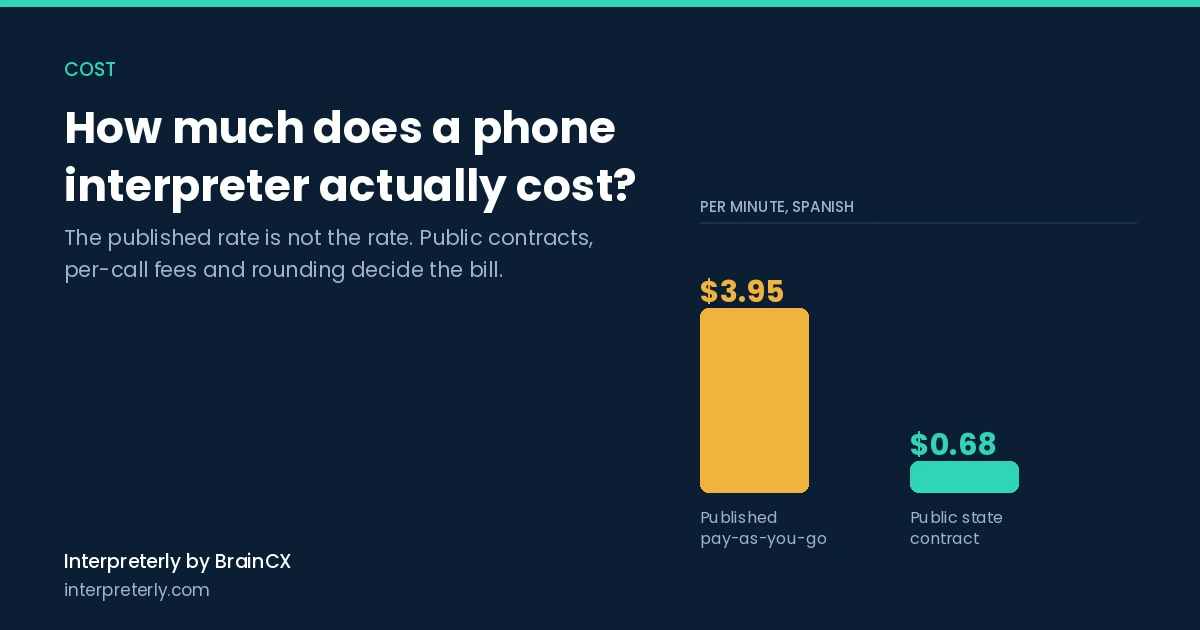
There is no billing code that solves this and no patient-pays option. The cost sits with the practice, which is why how you deliver language access matters. If you are currently paying a per-minute rate on every call, you can work out what per-minute interpretation is costing you against your own call volume in a couple of minutes.
One more point that surprises people: patients can decline. Section 92.201(h) states that nothing in the section requires a patient to accept language assistance services. Offering it is your obligation. Accepting it is their choice, and the sensible practice is to document a refusal.
What a qualified interpreter is
The rule defines the term rather than leaving it to judgment. Under 45 CFR 92.4, a qualified interpreter for an individual with limited English proficiency is an interpreter who, on site or through a remote interpreting service, has demonstrated proficiency in speaking and understanding both English and at least one other spoken language, can interpret effectively, accurately and impartially without changes, omissions or additions while preserving tone and sentiment, and adheres to accepted interpreter ethics including confidentiality.

Read that definition next to your current arrangements. Three consequences follow.
First, when interpretation is required, 92.201(c)(1) says the covered entity must offer a qualified interpreter. Not someone available. Not the nearest bilingual person.
Second, qualified bilingual staff are a separate defined category. A member of your workforce counts only if you have designated them to provide in-language assistance as part of their assigned job, and they have demonstrated proficiency to you. Being conversationally bilingual does not meet the definition on its own, which is a distinction covered in more detail [here].
Third, 92.201(e)(4) closes the gap. A covered entity must not rely on staff other than qualified interpreters, qualified translators or qualified bilingual staff to communicate with patients who have limited English proficiency.
Where the front desk actually gets caught
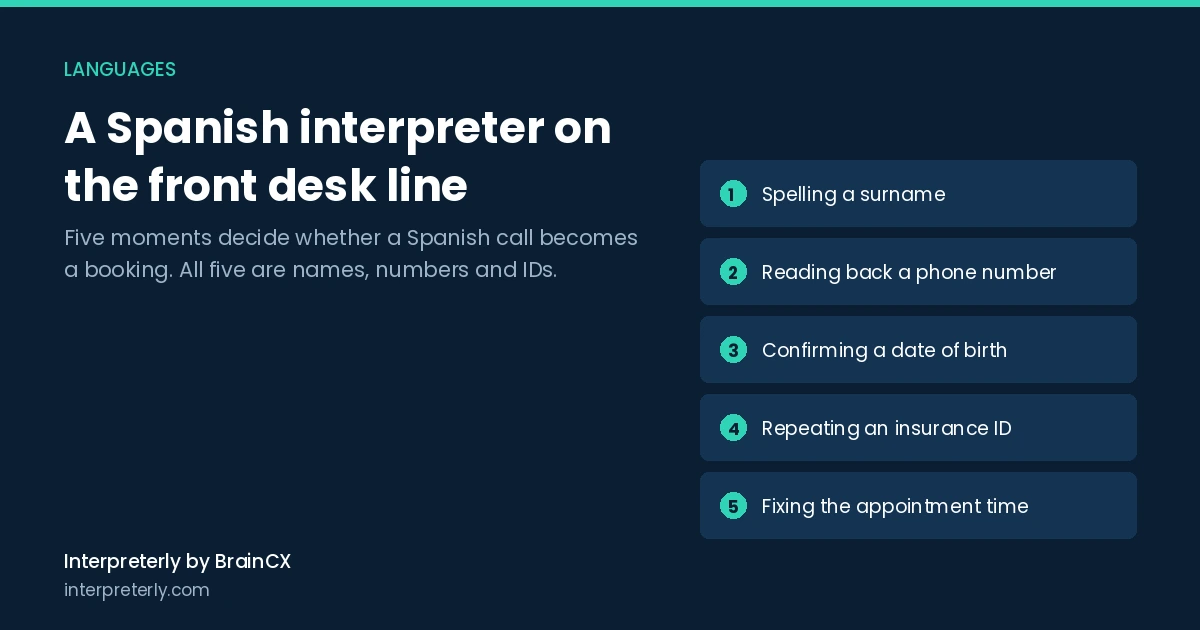
The rule reads as though every language interaction is a clinical one. Most are not. Here are the three calls where practices get into trouble, none of which happen in an exam room.
The new patient who cannot book. A Spanish-speaking caller reaches the front desk, the staff member cannot take the appointment, and the call ends in a promise to call back with someone who speaks Spanish. That call back often does not happen the same day, and the patient books somewhere else. Nothing was denied on paper. Access was denied in practice.
The accompanying adult who becomes the standing solution. A patient brings a family member to every visit and the practice quietly stops arranging anything else. The rule permits reliance on an accompanying adult only in narrow circumstances, covered in full in the family member question, and a habit is not one of them.
The billing and results call nobody classified as clinical. Explanation of benefits, a collections call, a pre-procedure instruction, a result that needs a follow-up appointment. The notice of availability requirement at 45 CFR 92.11 specifically lists billing and collections materials and communications about cost of care, which tells you how HHS views these interactions. They are in scope.
This is the part of the problem an interpreter agency was never designed for. A qualified human interpreter on a per-minute line is the right answer for informed consent and complex clinical conversations. For two hundred short scheduling calls a day it is slow and expensive, and the industry’s two to five minute minimum charge means a thirty-second question still bills at the minimum.
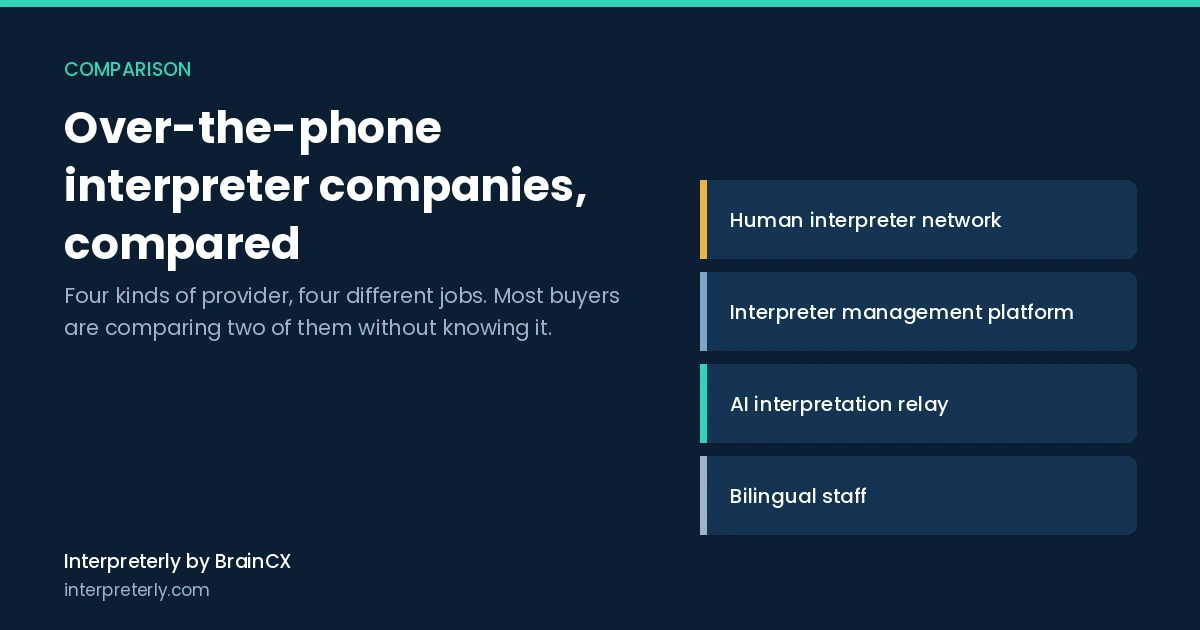
Traditional interpreter companies add a third person to the phone call. AI companies replace the employee entirely. Interpreterly does neither. The employee stays on the call and we carry the language, which is why the model fits routine front-desk volume rather than the conversations where a qualified human interpreter is required.
What happens if we do not provide language access
A patient can file a complaint with the HHS Office for Civil Rights, which enforces Section 1557 and publishes its complaint process on the Section 1557 page. Enforcement under the rule uses the mechanisms available under Title VI, Section 504, Title IX and the Age Act, which include voluntary resolution agreements and, at the far end, fund suspension or termination.
Separately, the preamble to the 2024 rule acknowledges that courts have consistently found individuals may bring private claims under Section 1557. Accreditation findings are a different track again, assessed by your accreditor rather than by OCR.
The realistic exposure for a mid-size practice is not a headline penalty. It is a complaint, an information request, and discovering that the written language access procedure required since July 2025 does not exist.

What to put in place this quarter
- Confirm whether you are covered. If you bill Medicare Part B, assume yes.
- Write the language access procedure required by 45 CFR 92.8(d). It has a minimum content list: coordinator contact details, how staff identify a patient with limited English proficiency, how staff obtain a qualified interpreter, the names of any qualified bilingual staff, and an inventory of translated materials.
- Publish the notice of availability in English plus the 15 most commonly spoken LEP languages in each state where you operate, in the places 92.11 lists, including your website.
- Decide who covers routine phone volume and who covers clinical conversations, and write both into the procedure.
- Train the people who answer the phone, and document that you did. The training obligation names employees who interact with patients and those who handle billing.
- Check that a patient can be served on the first call rather than a call back. That is the test a complaint will apply.
If it helps to see the mechanics of the routine-call half, here is how AI phone interpretation works on a real call, and our compliance approach covers HIPAA, the BAA and audit-ready transcripts.
Frequently asked questions
Does Section 1557 apply to a small private practice?
It applies to any health program or activity that receives federal financial assistance, directly or indirectly. Since the 2024 final rule treats Medicare Part B payments as federal financial assistance, most private practices that bill Part B are covered regardless of size. Practices with fewer than 15 employees are not required to designate a Section 1557 Coordinator or maintain a grievance procedure.
Can we charge patients for interpretation?
No. Language assistance services must be free of charge under 45 CFR 92.201(b), and a covered entity must not require a patient to provide or pay for their own interpreter.
Does a phone interpreter satisfy the requirement?
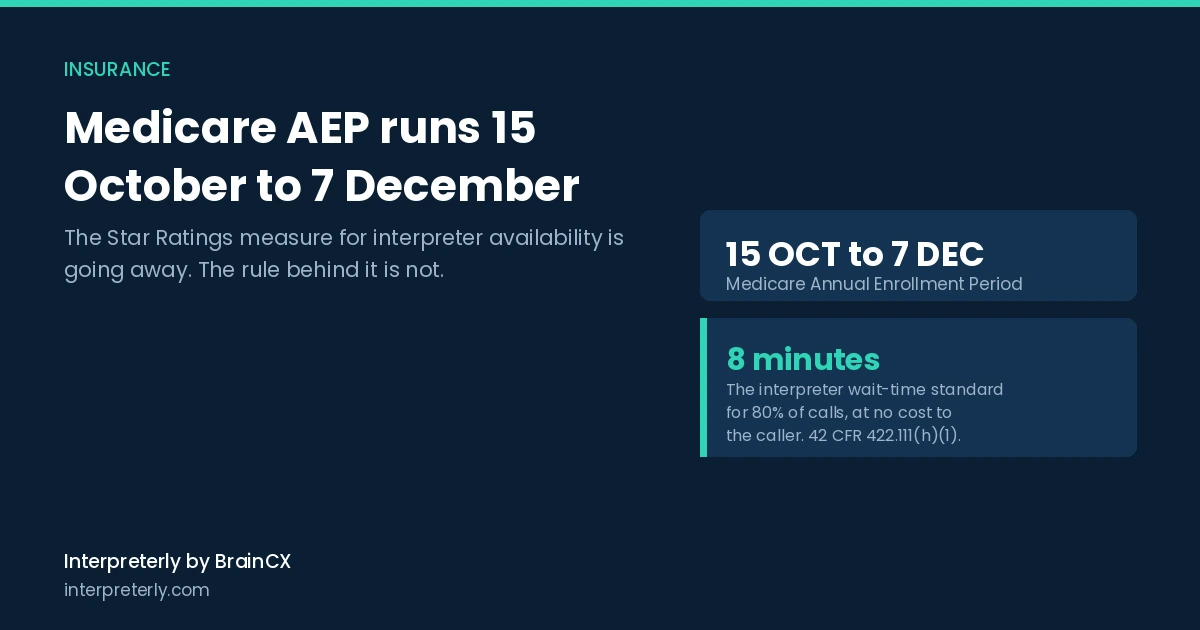
The rule does not prescribe a modality. It requires a qualified interpreter and, where audio remote interpreting is used, sets quality requirements at 92.201(g), including real-time audio on a dedicated high-bandwidth connection without lags, clear transmission of voices, and trained users.
What languages does the notice of availability have to be in?
English plus at least the 15 languages most commonly spoken by individuals with limited English proficiency in each state where the entity operates, per 45 CFR 92.11.
Are we compliant if we use an AI interpreter?
Compliance is a determination about your whole program, not about one tool. Interpreterly helps practices meet their live conversation obligations on routine calls, and qualified human interpreters remain necessary where the law requires them. Confirm your own position with counsel.