Short answer: an AI phone interpreter can be HIPAA compliant, and Interpreterly is, with a Business Associate Agreement (BAA) available. But “HIPAA compliant” and “meets our language-access obligations” are two completely different things, and healthcare buyers confuse them constantly. A vendor can be fully HIPAA compliant and still leave you out of compliance with the rules that actually govern interpreters.
If you’re evaluating an AI phone interpreter for a clinic, a dental group, or a behavioral health practice, this guide separates the two questions so you can judge any tool properly, and ask the vendor the questions that matter before a single patient call runs through it.
What HIPAA compliance actually covers
HIPAA governs how protected health information (PHI) is handled: how it moves, where it’s stored, who can see it, and how it’s safeguarded. For an AI phone interpreter, that comes down to a specific, checkable set of things. The vendor has to protect the audio and any data captured on the call, sign a BAA that legally binds it to HIPAA’s requirements as your business associate, and follow the technical safeguards HIPAA expects, like encryption.
None of that is vague once you know what to ask for. HIPAA compliance for a phone interpreter is a concrete checklist, not a marketing badge. And the single most important item on it is the BAA. If a vendor won’t sign a Business Associate Agreement, it cannot lawfully handle PHI on your behalf, full stop. That one question filters out a surprising number of consumer-grade “translation” apps that market themselves to businesses but were never built for regulated data.
The other items are about how your call data is treated once it leaves your phone system. Is it encrypted in transit and at rest? Is it used to train the vendor’s models, something that should be off the table for healthcare data? Where does it physically live, and who inside the vendor can access it? A serious healthcare vendor answers all of these plainly. Interpreterly is HIPAA compliant, offers a BAA, and you can see the full posture on the compliance page.
The thing HIPAA compliance does not cover: Section 1557
Here’s the distinction that trips up almost everyone, and it’s the reason this article exists.
HIPAA is about protecting patient data. It says nothing about whether you provided a qualified interpreter. That’s a separate legal obligation, and it comes from Section 1557 of the Affordable Care Act, the nondiscrimination provision that requires covered healthcare entities to give patients with limited English proficiency (LEP) meaningful access to care.
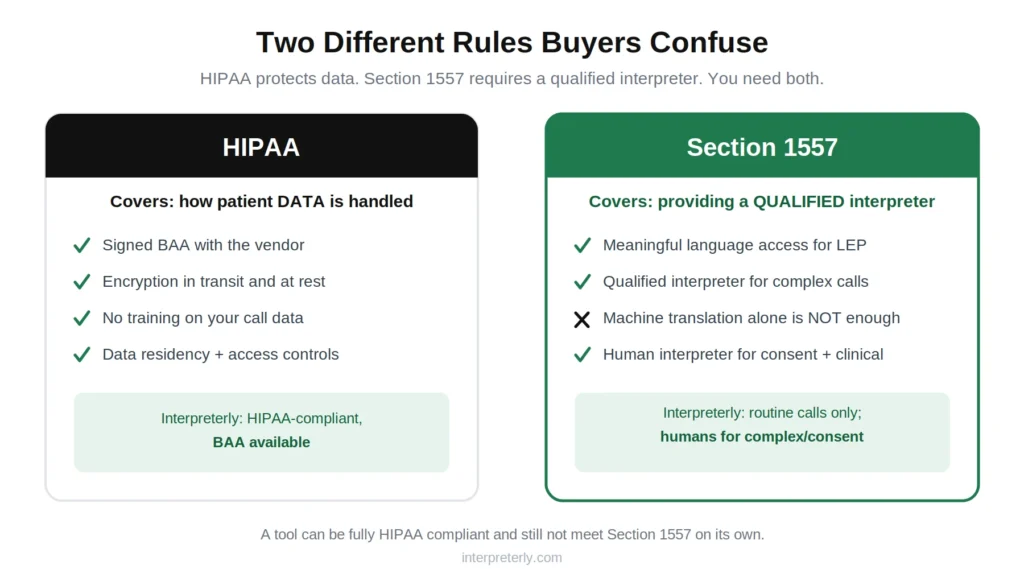
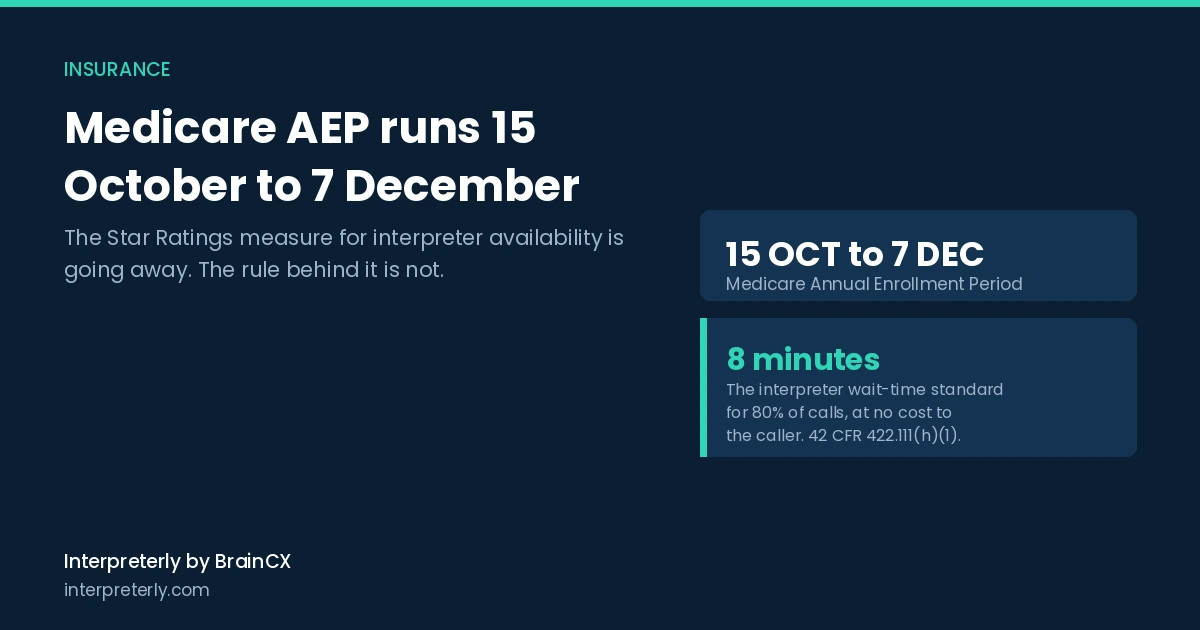
The 2024 Section 1557 final rule made something explicit that matters enormously for anyone shopping for AI: machine translation alone does not satisfy the “qualified interpreter” requirement in covered settings, particularly for complex or consequential communications. In plain terms, you can buy the most secure, most HIPAA-compliant AI interpreter on the market and still fail to meet your language-access duty if you use it as your only interpreter for a clinical conversation or an informed-consent discussion.
So the two rules stack. HIPAA compliance is necessary but not sufficient. You need a HIPAA-compliant tool and a plan for qualified human interpreters where the law requires them. We cover the language-access side in depth in the Section 1557 interpreter requirements guide, and it’s worth reading alongside this one, because a vendor that only talks about HIPAA is telling you half the story.
Why vendors blur the line (and why that should worry you)
There’s a commercial reason this confusion persists. “HIPAA compliant” is an easier claim to make and a more comforting one to hear, so a lot of AI translation tools lead with it and stay quiet about Section 1557. Some go further and imply, or outright say, that their AI can replace human interpreters entirely. That claim is a red flag. It doesn’t survive contact with the actual regulation, and a vendor making it is either uninformed about healthcare compliance or willing to overstate to close a deal. Neither is what you want handling patient calls.
The honest framing is the one we hold to across everything Interpreterly publishes: AI handles the routine, high-volume calls, and qualified human interpreters handle the complex and legally required ones. A vendor that tells you the truth about the limits of its own product is, paradoxically, the safer choice.
How to evaluate an AI phone interpreter for healthcare
Put the two rules together and you get a practical evaluation checklist. Start with the HIPAA questions, because if a tool fails these, nothing else matters.
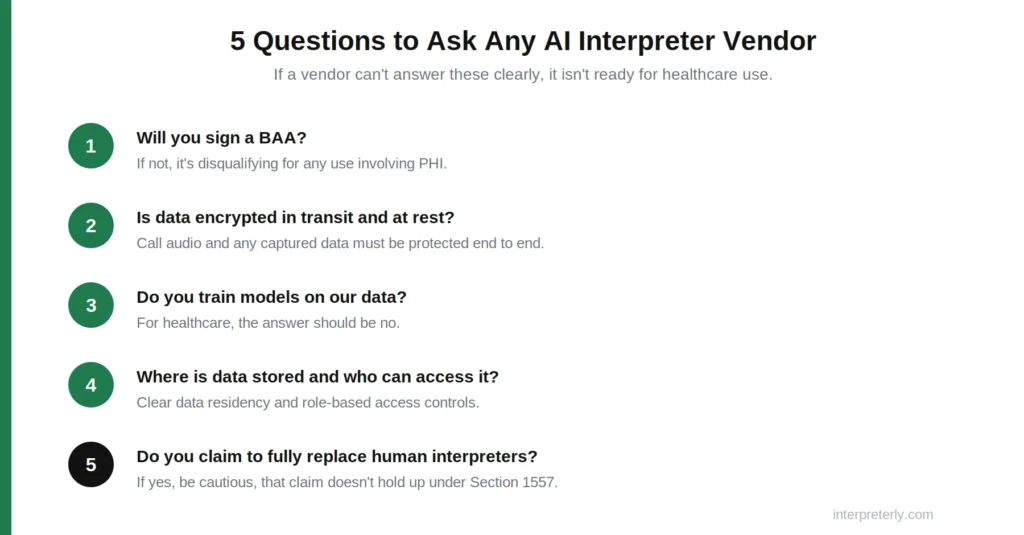
The five questions on that checklist are the ones we’d ask in the vendor’s shoes. Will you sign a BAA? Is data encrypted in transit and at rest? Do you train models on our call data? Where is data stored and who can access it? And, tellingly, do you claim to fully replace human interpreters? The first four are HIPAA. The fifth is the Section 1557 tell, and it’s the one most buyers forget to ask.
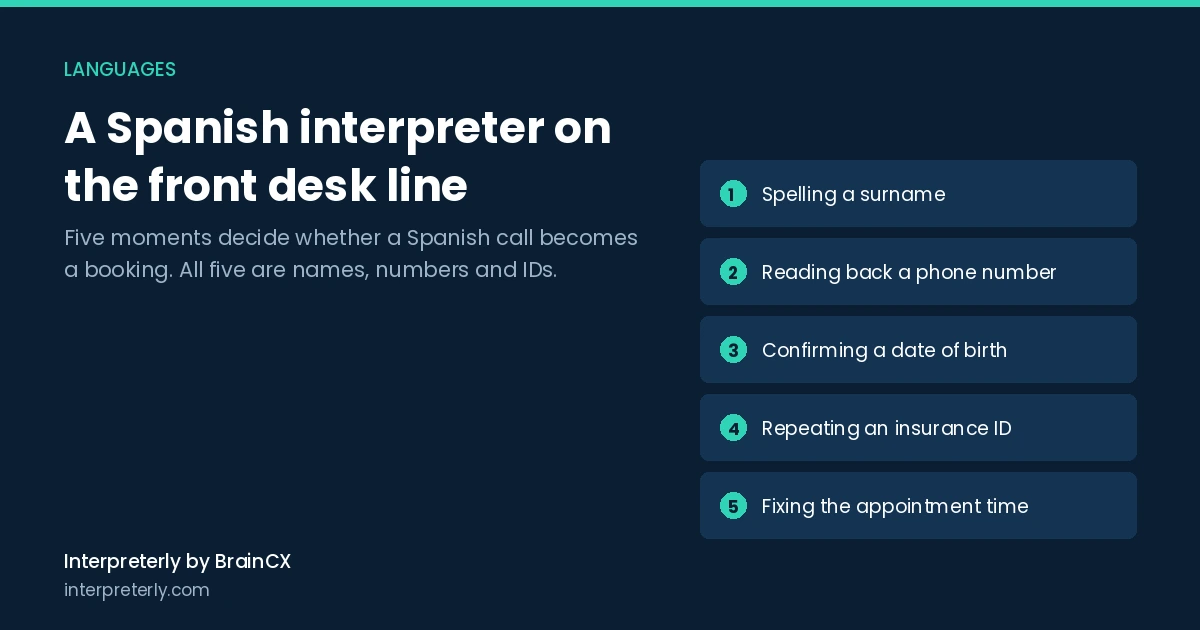
Beyond the compliance questions, there’s a quality dimension that matters specifically on healthcare calls: accuracy on the details. The place any phone interpreter is most likely to fail is the high-stakes specifics, spelling a patient’s name, confirming a date of birth, capturing a phone number or an insurance member ID. A wrong digit in a member ID or a misheard date of birth creates rework, billing problems, and clinical risk. Interpreterly is tuned for around 99% accuracy on exactly those fields, and it uses read-back confirmation, the same technique a good human interpreter uses when they repeat a number back to make sure they got it right. When you evaluate any tool, test it on the boring, detail-heavy parts of a real call, not just a scripted greeting.
Where an AI interpreter fits in a compliant workflow
The clinics that get this right don’t treat AI as a replacement for their interpreter strategy. They treat it as the tool that finally makes the routine call volume affordable and consistent, while their qualified human interpreters stay focused where the law and good care require them.
In practice that looks like this. Routine, administrative calls, appointment scheduling, reminders, insurance and eligibility questions, basic intake, run through the AI interpreter in the patient’s language, on demand, with no per-minute meter. The complex and consequential conversations, clinical discussions, diagnoses, informed consent, and in behavioral health, anything touching substance use disorder records under 42 CFR Part 2, go to a qualified human interpreter. That split keeps you compliant on both fronts at once: HIPAA-compliant data handling on every call, and qualified-interpreter coverage where Section 1557 demands it.
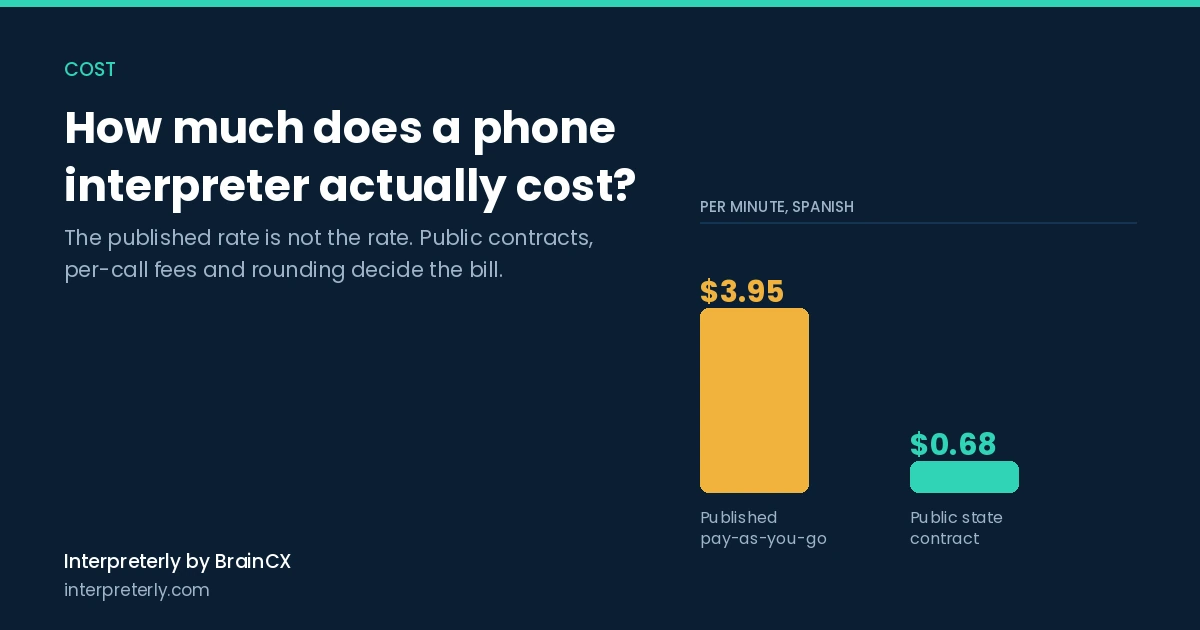
It also happens to be the model that makes financial sense. Routine calls are the bulk of the volume, and paying a per-minute human rate for a ninety-second appointment confirmation is where interpreter budgets quietly bleed. Moving that volume to a flat-rate AI interpreter, while reserving humans for the twenty percent that truly needs them, is both the compliant answer and the affordable one. If you want to see how that works on a real front desk, the AI medical interpreter for clinics page walks through it.
Frequently asked questions
Is AI phone interpretation HIPAA compliant?
It can be, if the vendor signs a BAA, encrypts data in transit and at rest, doesn’t train its models on your call data, and follows HIPAA’s security requirements. Interpreterly meets these and offers a BAA. The most important single test is whether the vendor will sign a Business Associate Agreement, if it won’t, it cannot lawfully handle protected health information on your behalf.
Does HIPAA compliance mean an AI interpreter meets Section 1557?
No, and this is the most common misunderstanding. HIPAA covers how patient data is protected. Section 1557 covers whether you’ve provided a qualified interpreter for language access. They’re separate obligations. Under the 2024 Section 1557 rule, machine translation alone does not meet the qualified-interpreter standard for complex or consequential healthcare communications, so a HIPAA-compliant AI tool still cannot be your only interpreter for a clinical or consent conversation.
What should we ask an AI interpreter vendor about HIPAA?
Ask five things: Will you sign a BAA? Is data encrypted in transit and at rest? Do you train models on our call data? Where is data stored and who can access it? And do you claim to fully replace human interpreters? The first four confirm HIPAA readiness; the fifth reveals whether the vendor understands Section 1557. A vendor that can’t answer these clearly isn’t ready for healthcare use.
Is Interpreterly HIPAA compliant?
Yes. Interpreterly is HIPAA compliant with a BAA available. On the language-access side, it’s designed for routine calls, with qualified human interpreters kept for the complex and legally required conversations. You can review the details on the compliance page or ask about a BAA directly.
Can an AI interpreter replace our human interpreter service entirely?
Not for everything. For routine, high-volume calls, it can handle the large majority of your interpreter volume. For complex clinical conversations, diagnoses, and informed consent, a qualified human interpreter is still required under Section 1557. The compliant and cost-effective model is hybrid: AI for the routine calls, humans for the complex ones.
The bottom line
“Is it HIPAA compliant?” is the right question to ask, but it’s only the first one. HIPAA tells you whether a tool protects patient data. Section 1557 tells you whether you’ve actually met your obligation to communicate with LEP patients. You need both, and any vendor worth trusting will be clear about where its product fits and where a human interpreter is still required.
Interpreterly is built for that reality: HIPAA compliant with a BAA, tuned for accuracy on the details that matter, and honest about handling the routine calls while your qualified interpreters cover the rest. If you’re evaluating it for your practice, start a free 30-day trial to test it on real calls, or talk to our team about a BAA and your specific requirements.