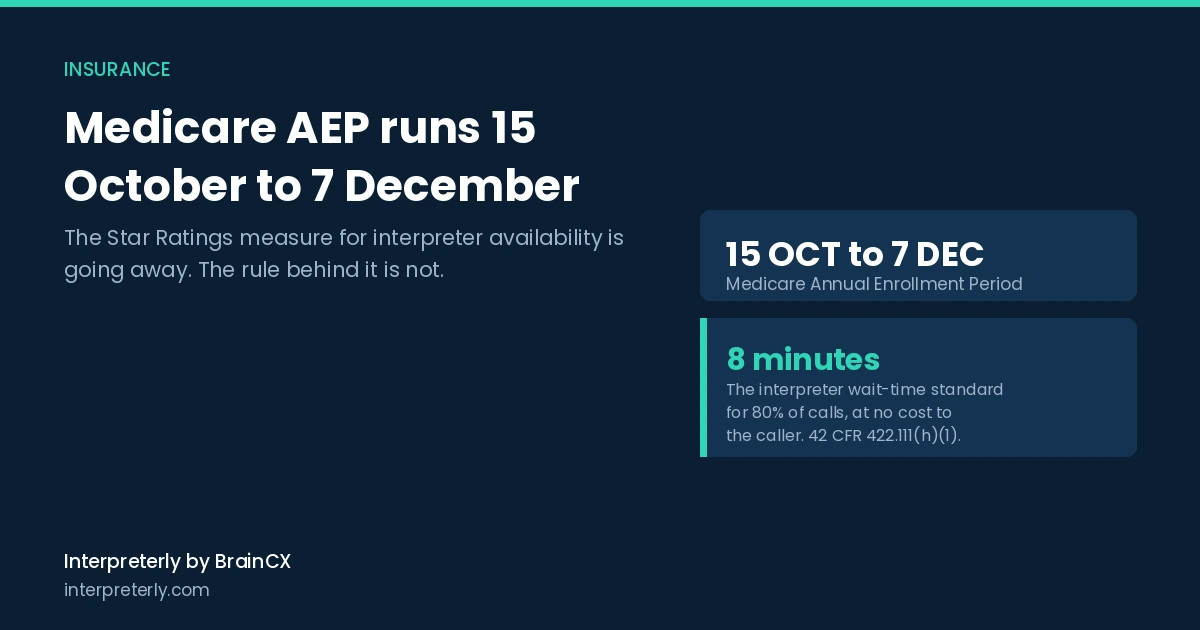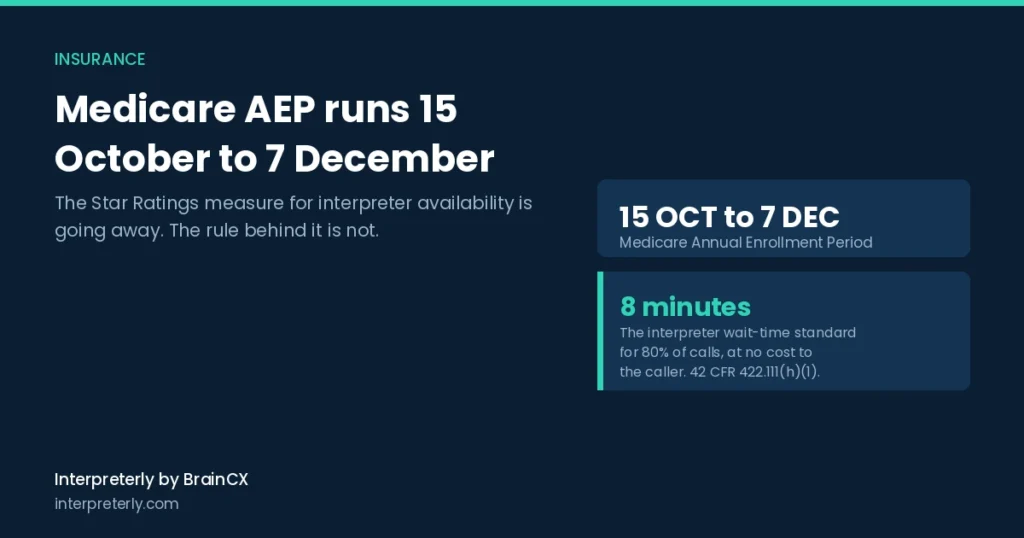
The Medicare Annual Enrollment Period runs from 15 October to 7 December every year, and it is the highest call-volume window a Medicare plan or broker will see. Spanish is where that volume breaks first, because English staffing can flex with overtime and Spanish staffing cannot. CMS is removing the Star Ratings measure that scored interpreter availability. The underlying requirement is unchanged.
That last point is the one worth seven weeks of attention.
What the rule actually says
Under 42 CFR 422.111(h)(1), a Medicare Advantage organisation must operate a toll-free customer service call center. For coverage beginning on or after 1 January 2022, the regulation requires interpreters to be available for 80 percent of incoming calls requiring an interpreter within 8 minutes of the caller reaching a customer service representative, and made available at no cost to the caller. The parallel Part D provision sits at 42 CFR 423.128(d)(1).
CMS has monitored this directly. Its Part C and Part D call center monitoring programme places test calls to plan lines to measure interpreter availability and TTY functionality, measuring whether a caller can actually communicate with someone in the call center’s non-primary language.
So far, so familiar. Here is what changed this year.
In the contract year 2027 final rule, published in the Federal Register on 6 April 2026, CMS finalised the removal of eleven Star Ratings measures, including Call Center Foreign Language Interpreter and TTY Availability for both Part C and Part D. Those two measures are removed beginning with the 2028 Star Ratings. CMS gave the reason plainly: performance on the measure sat around 94 percent with little variation between contracts, so beneficiaries could not meaningfully distinguish plans on it.
In the same rule, CMS stated that MA organisations, Part D sponsors and cost plans must continue to provide interpreter services for non-English speaking and LEP individuals, including the requirements on interpreter availability and wait times for incoming calls, and that those services must be available at no cost to the caller.
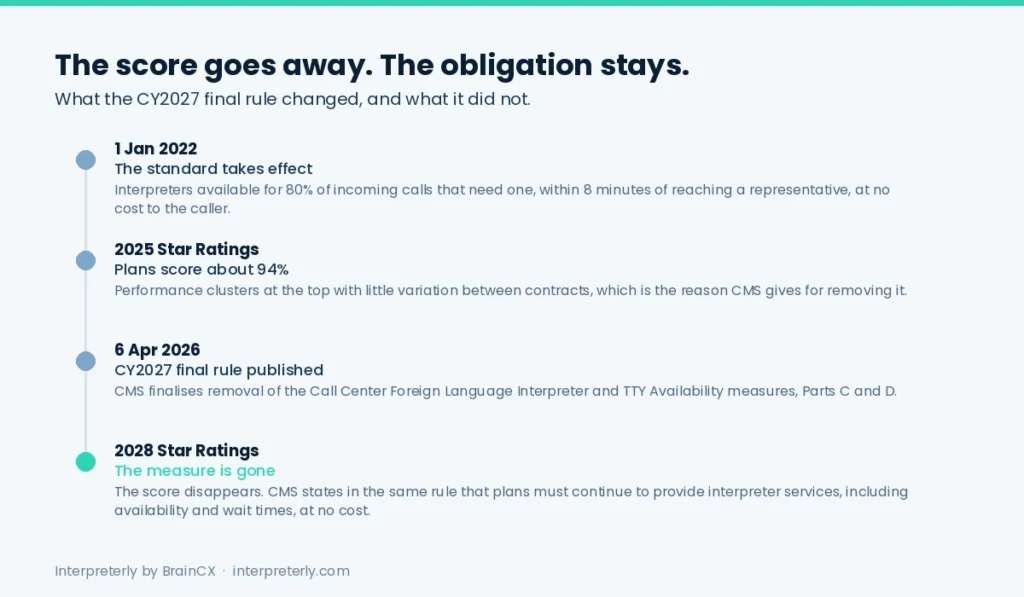
Read those two paragraphs together. The score is going. The obligation is staying. What disappears is the quality-bonus incentive that made language access a Star Ratings line item, which means that from 2028 the pressure to maintain it comes from compliance and from member experience rather than from the rating.
This is a plain-English summary, not legal advice. Confirm your own obligations with your counsel.
Why Spanish breaks before English does
The operational problem is not the rule. It is the shape of the surge.
AEP concentrates a year of plan-change decisions into seven and a half weeks. Annual Notice of Change letters land in September, the Part D formulary for the coming year is published on 1 October, and the questions arrive in the middle of October. Call volume does not rise gently. It steps.
English capacity flexes. You can authorise overtime this afternoon, pull staff off a non-urgent queue, or move volume between sites. Spanish capacity cannot flex the same way, because the constraint is not the seat. It is the language skill sitting in the seat. Recruiting, language-assessing, hiring and training a bilingual agent is a multi-week exercise, and hiring is not a lever you can pull inside a surge that is already running.
That leaves most operations with three real options when the Spanish queue backs up during AEP:
- Overtime from the bilingual staff you already have, until they are exhausted or until you hit the ceiling of how many of them exist.
- A per-minute interpreter vendor, which works, and which adds queue wait on top of your own queue wait at exactly the moment your wait time is the problem.
- A language layer that lets English-speaking representatives take the Spanish calls directly.
Most plans and brokers run some combination of the first two, discover in week three that neither scales the way they assumed, and write a note to themselves about next year.
The member-experience side, which does not go away
Removing a Star Ratings measure does not remove the member from the experience. CAHPS survives the CY2027 measure cuts, and a member who waited on a Spanish line during AEP is answering questions about getting needed care and about customer service later.
There is also the TPMO and marketing side of the same window. Plans must make the notice of availability of language assistance services available in English and at least the fifteen languages most commonly spoken by individuals with limited English proficiency in the relevant state or states. A plan that advertises free interpreter services in a multi-language notice and then cannot staff the Spanish line during the one window when members act on it has a gap between the notice and the operation.
What to actually do between now and 7 December
Measure the Spanish queue separately. If your dashboard reports a single answer-time number, you cannot see the problem. Split Spanish out and watch it hourly, not daily.
Know your interpreter wait time, not just your hold time. The 8-minute standard starts when the caller reaches a representative. If your bridge to an interpreter is slow at 4pm, that is the number that matters.
Name the dependency in writing. Which languages sit with a single vendor, a single site or a single country. What your recovery path is if that site goes dark in week four. Business continuity plans routinely name power, network and premises, and routinely forget to name language.
Have a second path that is not more of the same path. A second human vendor with the same queue dynamics is not a second path.
Brief the representatives who will carry it. If they are going to run interpreted calls, the mechanics should not be new to them on the day volume peaks. It takes a few minutes to conference an interpreter into a call, and that is worth doing once in a quiet hour rather than for the first time in a busy one.
Where Interpreterly fits in AEP
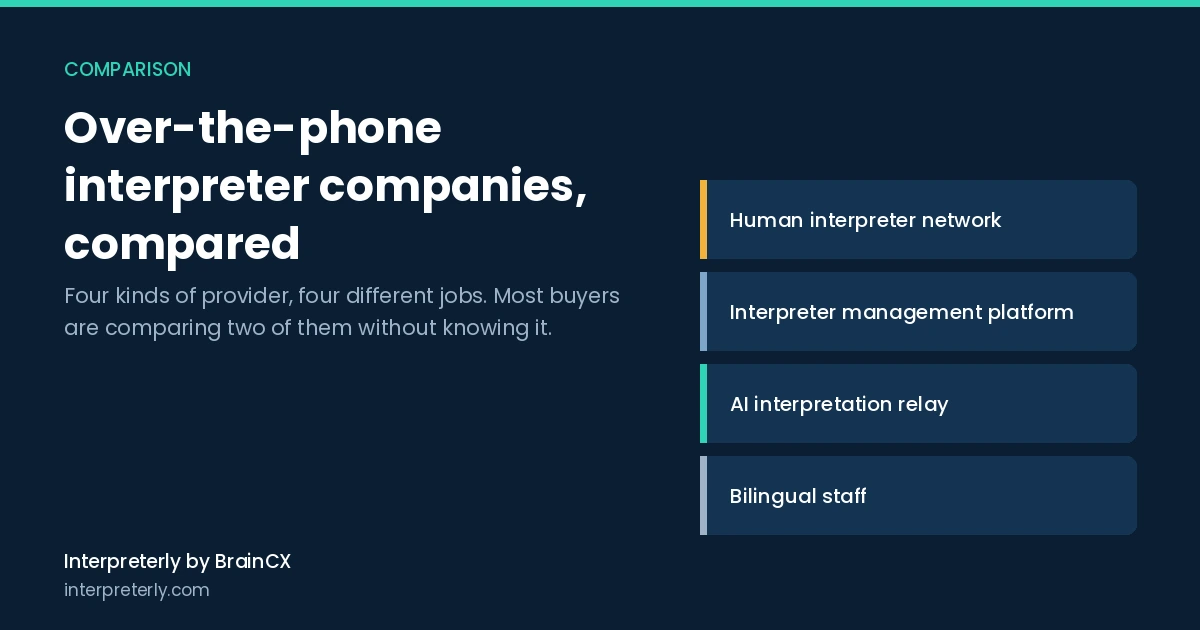
Traditional interpreter companies add a third person to the phone call. AI companies replace the employee entirely. We do neither. The employee stays on the call and we carry the language.
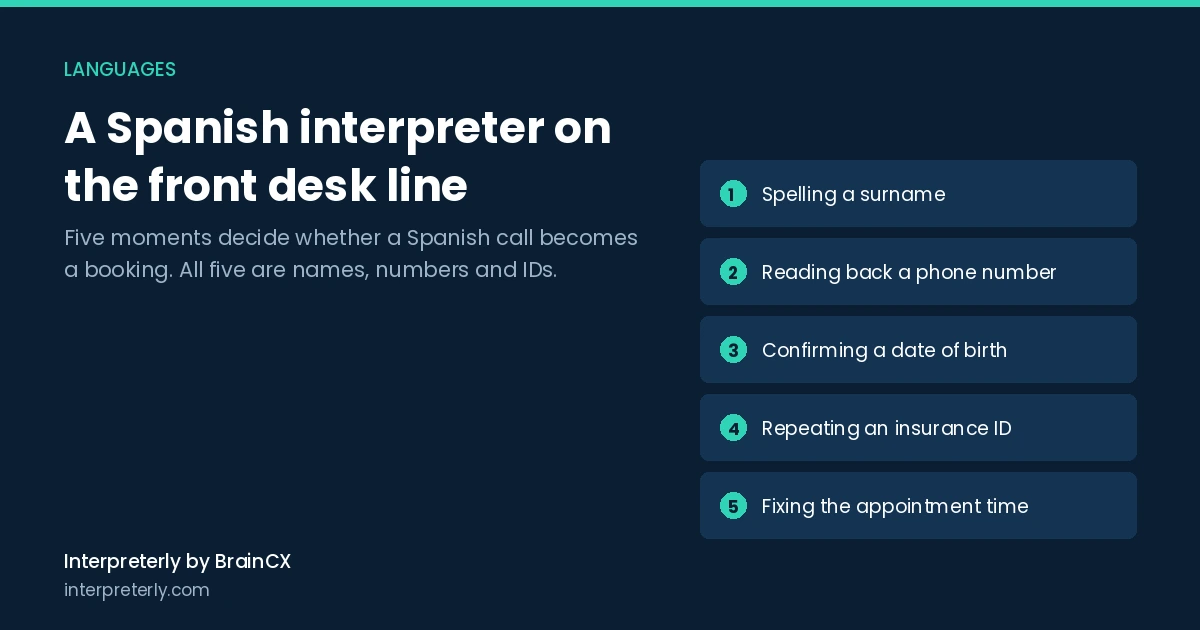
For an AEP operation that means your existing representative keeps the call. They have the plan knowledge, the screen, the scripts and the compliance training. The thing they do not have is Spanish. We carry Spanish and Brazilian Portuguese live, with Haitian Creole coming soon, and we are tuned hard on the part of these calls that actually fails: the member ID, the callback number, the surname and the date of birth. Read-back confirmation on those is the difference between a completed enrollment and a call-back.
Phone interpretation for insurance calls sets out how this runs on quotes, FNOL and enrollment lines, and the Spanish phone interpreter page covers the language specifically.
This is extra coverage, not a replacement for the interpreter vendor you already have. Rare languages, ASL and any conversation that legally requires a qualified human interpreter stay where they are.
If you want to look at your own AEP numbers before week three, talk through your call volume with us in fifteen minutes.
Frequently asked questions
When does Medicare AEP start and end?
The Medicare Annual Enrollment Period runs from 15 October to 7 December each year. Changes made during it take effect on 1 January.
Do Medicare Advantage plans have to provide interpreters?
Yes. Under 42 CFR 422.111(h)(1), for coverage beginning on or after 1 January 2022, interpreters must be available for 80 percent of incoming calls that require one within 8 minutes of the caller reaching a customer service representative, and at no cost to the caller. The equivalent Part D requirement is at 42 CFR 423.128(d)(1). Confirm your own obligations with your counsel.
Is CMS removing the interpreter requirement for 2027?
No. CMS is removing the Call Center Foreign Language Interpreter and TTY Availability measures from Star Ratings, beginning with the 2028 Star Ratings, under the contract year 2027 final rule published on 6 April 2026. In that rule CMS stated that plans must continue to provide interpreter services, including the availability and wait-time requirements, at no cost to the caller. The measure is being removed, not the rule.
Why do Spanish calls back up during AEP when English calls do not?
Because the constraint is the language skill, not the seat. English volume can be met with overtime or by moving staff between queues on the same day. Bilingual capacity takes weeks to add, which means it cannot respond to a surge that is already running.
Can an AI interpreter be used on Medicare member calls?
AI interpretation is used for routine, day-to-day member service conversations, with a qualified human interpreter kept for work that requires one. The design that matters is whether a qualified employee stays in the conversation. Confirm your specific obligations with your own counsel.