People often use the words “interpreter” and “translator” interchangeably. IA practice manager fielding an influx of Spanish-speaking patients hires an “interpreter” when the job calls for a “translator,” and the mix-up costs more than time. It creates compliance risk, wasted budget, and a vendor who can’t do what you actually needed.
The difference comes down to the medium. Interpreters handle spoken language in real time. Translators handle written language on a delay. A business operations lead expanding internationally needs both, but for different documents and different moments, and hiring the wrong one for the wrong task is where the risk starts.
This guide breaks down what each role does, the skills each one requires, and how new technology is changing the way businesses pay for language access.
The Short Answer: Spoken vs. Written
- You need an interpreter when two people are speaking to each other right now, such as during a phone call, a medical intake interview, or a live conference.
- You need a translator when you have a static document, such as a legal contract, a website, or an employee handbook, that needs to be converted into another language.
What is a Translator?
A translator converts written text from a source language into a target language. Because they work with written materials, translators do not usually work in real time. They have the time to research terminology, consult dictionaries, and review their work to perfect accuracy.
Translators are typically used for:
- Patient intake forms and consent documents.
- Technical manuals and product packaging.
- Website copy and email campaigns.
- Legal contracts and transcripts.
Required skills: Translators need excellent writing and grammar skills in their target language. They must also have a deep cultural understanding of the region they are translating for idioms and phrasing read naturally.
What is an Interpreter?
An interpreter converts spoken words from one language to another as a conversation is happening. They enable live, two way communication between parties who do not share a common language.
Interpreters are typically used for:
- Live phone calls between businesses and customers.
- Medical appointments and telehealth sessions.
- Courtroom proceedings and legal depositions.
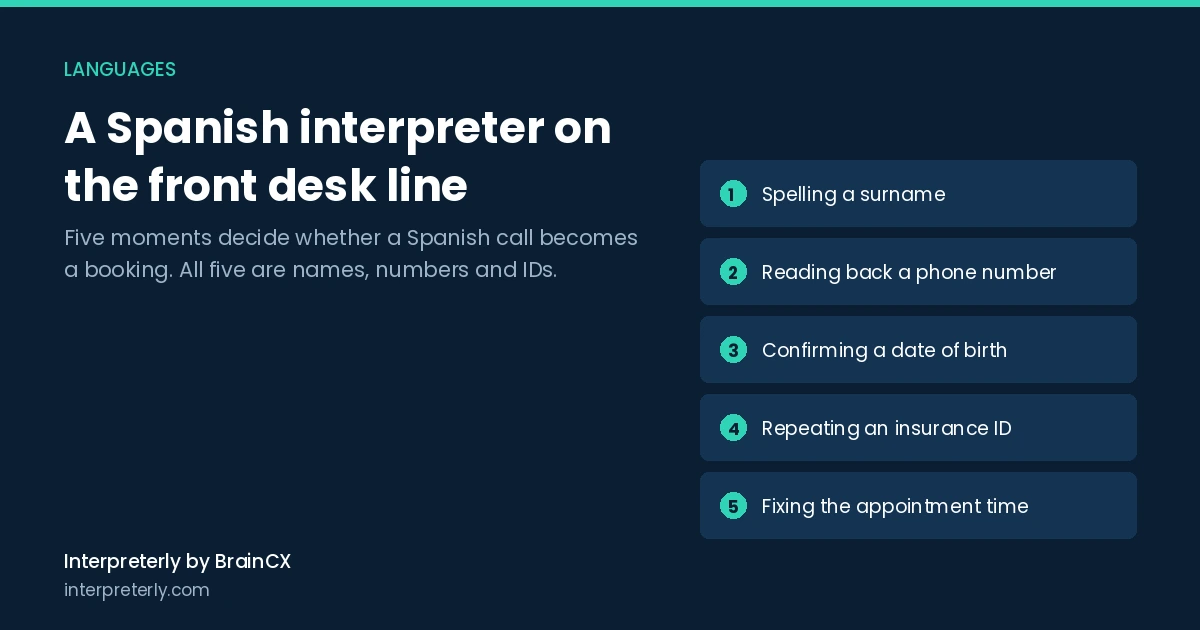
- Customer support and front-desk interactions.
Required skills: Interpreters must have exceptional active listening skills, rapid recall, and the ability to think on their feet. Because they work live, they do not have the luxury of looking up words in a dictionary. They must quickly grasp the speaker’s intent and convey it accurately without losing the flow of the conversation.
Key Differences: A Side-by-Side Comparison
| Feature | Translator | Interpreter |
| Medium | Written text | Spoken word |
| Timing | Delayed (hours, days, or weeks) | Real-time (immediate) |
| Tools Used | Dictionaries, style guides, translation software | Headsets, telephones, conference platforms |
| Delivery | Exact phrasing, highly polished | Focuses on conveying immediate meaning and tone |
Where Real-Time AI Fits In
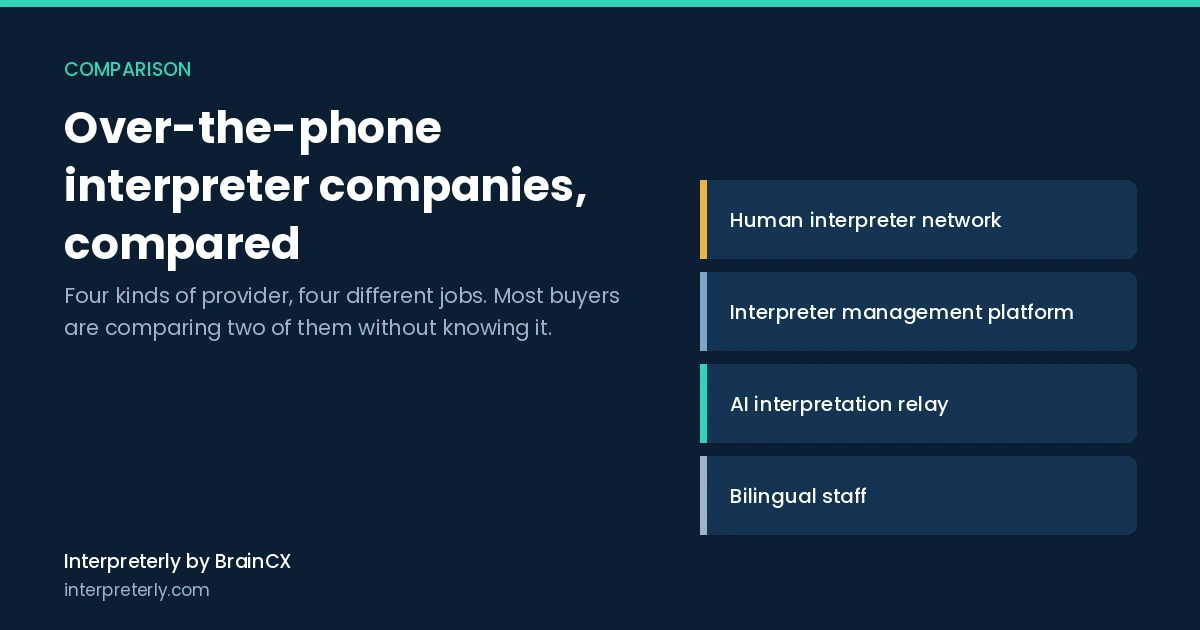
Historically, if a business needed a phone interpreter, they had to call a human interpreter network and pay by the minute. Today, organizations have a third option for handling routine, high-volume calls: a real-time AI phone interpreter.
Instead of waiting on hold for an agency, you can conference an AI voice interpreter into any call on a cell phone, landline, or VoIP system. You do not need to ask the caller to download an app, and you can see how AI phone interpretation works directly within your existing phone setup.
The strategy for modern businesses is simple: use AI for the routine 80% of calls, and reserve human interpreters for the highly complex or legally required 20%.
For example, a dental group might hire a human translator to rewrite their medical history forms. But to handle daily appointment scheduling, they rely on phone interpretation for dental offices using AI. Because AI platforms offer a flat monthly price such as interpreterly’s $147 a month Starter tier, it serves as a flat-rate alternative to LanguageLine and eliminates unpredictable per-minute billing.
Healthcare Compliance and the Section 1557 Rule
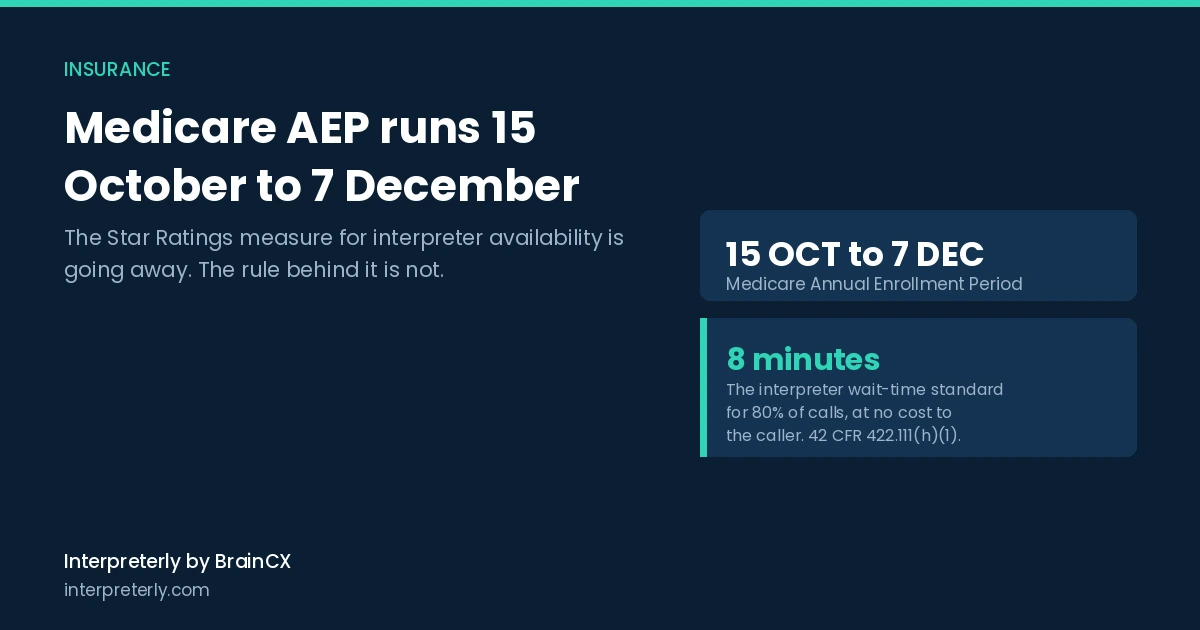
If you operate a healthcare facility, language access is more than a customer service issue; it is a regulatory requirement. When choosing between translators, interpreters, and AI platforms, you must understand your compliance obligations.
Important Compliance Note: Under the 2024 Section 1557 final rule, machine translation alone does not satisfy the “qualified interpreter” requirement in covered healthcare settings. interpreterly supports language access and handles routine administrative calls (like scheduling and basic intake) with ~99% accuracy on numbers and IDs. However, it does not replace a qualified human interpreter where one is legally required, such as during complex medical diagnoses. Always keep a human fallback option available so your clinic maintains HIPAA and language-access compliance by keeping a human fallback option available.
Which Service Do You Actually Need?
To decide whether you need an interpreter or a translator, ask yourself these three questions:
- Is the communication happening live? If yes, you need an interpreter.
- Are you dealing with documents or text? If yes, you need a translator.
- Are you handling routine phone calls? If yes, an AI phone interpreter is likely the fastest and most cost-effective solution.
If your team is struggling with high call volumes from limited English proficiency (LEP) callers, you can deploy an AI interpreter in about 12 minutes. Ready to test the sub-300ms latency for yourself? You can start a free 30-day trial to see how it handles your daily call flow.
Frequently Asked Questions (FAQ)
What is the main difference between an interpreter and a translator?
The main difference is the format. Translators work with written text on a delayed schedule. Interpreters work with spoken language in real-time, carrying live conversations as they happen
Can a translator also be an interpreter?
While some professionals do both, they are distinct skill sets. Translators specialize in reading, writing, and research, while interpreters specialize in active listening, memory, and public speaking. Being great at one does not automatically make someone great at the other.
Are phone interpreters expensive?
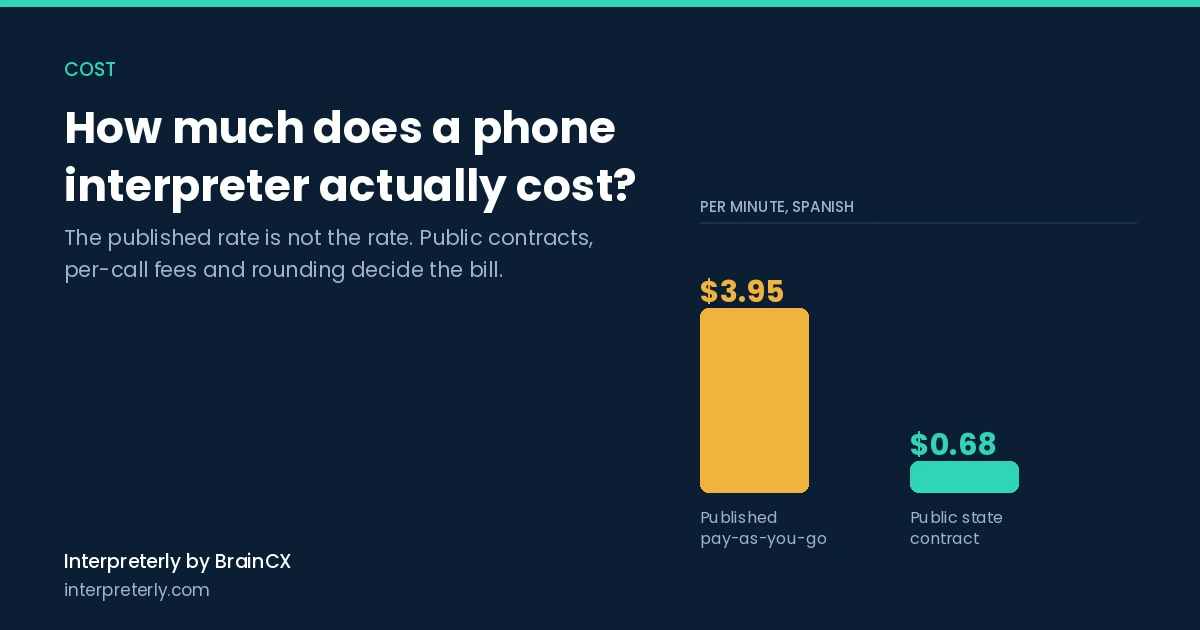
Traditional human phone interpreters typically charge by the minute, which can add up quickly for busy offices.but, AI phone interpreters operate on a flat monthly subscription model, drastically reducing costs for routine calls.
Do I need an app to use a phone interpreter?
It depends on the service. Traditional agencies often require you to log into a portal. Modern AI voice interpreters, like interpreterly, simply conference into your existing phone line without requiring you or the caller to download an app.